Modern adhesives provide instant strength and permanent bonds, and it might seem unusual that an antique furniture restorer would still rely on a glue that has been used for centuries. Animal glue remains one of the most important materials in my workshop. Understanding what it is, how it’s made, and why it’s used helps explain why traditional restoration methods continue to be relevant today.
What Is Animal Glue?
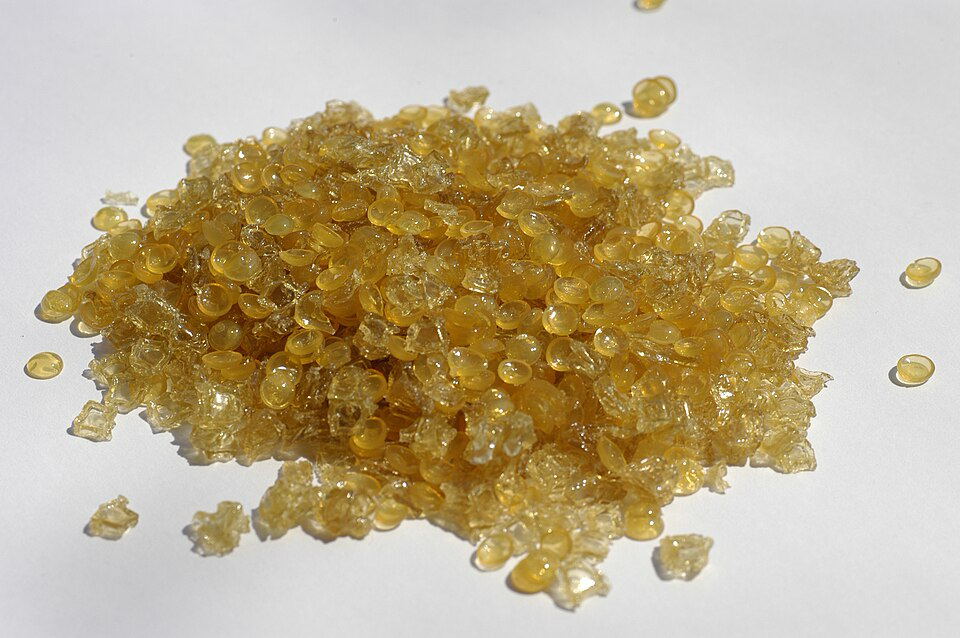
Animal glue (often referred to as hide glue, scotch glue, pearl glue, carpenter’s glue.) is a natural adhesive made from collagen, a protein found in animal connective tissues such as skin, bone, and sinew. It has been used in furniture making, cabinetmaking, veneering, and musical instrument construction for hundreds of years. It is typically supplied in granules or pearls which are soaked in water and then gently heated to form a liquid glue. Once cooled, it gels and sets forming a strong but reversible bond. Most antique furniture made before the early 20th century will have been originally assembled using animal glue. This fact alone makes it hugely significant in restoration work.
How Animal Glue Is Made?
Yes this is a bit eeky. Traditionally, animal glue is made by collecting collagen-rich material such as hides, bones, and connective tissue. They are cleaned, broken down and heated slowly in water to extract the collagen. This is filtered and dried and the resulting glue made into granules. The process converts collagen into gelatin, which becomes adhesive when heated with water. It is a natural material it responds to heat and moisture, which is not a flaw but a strength when restoring historic furniture.
How I Use Animal Glue in Restoration
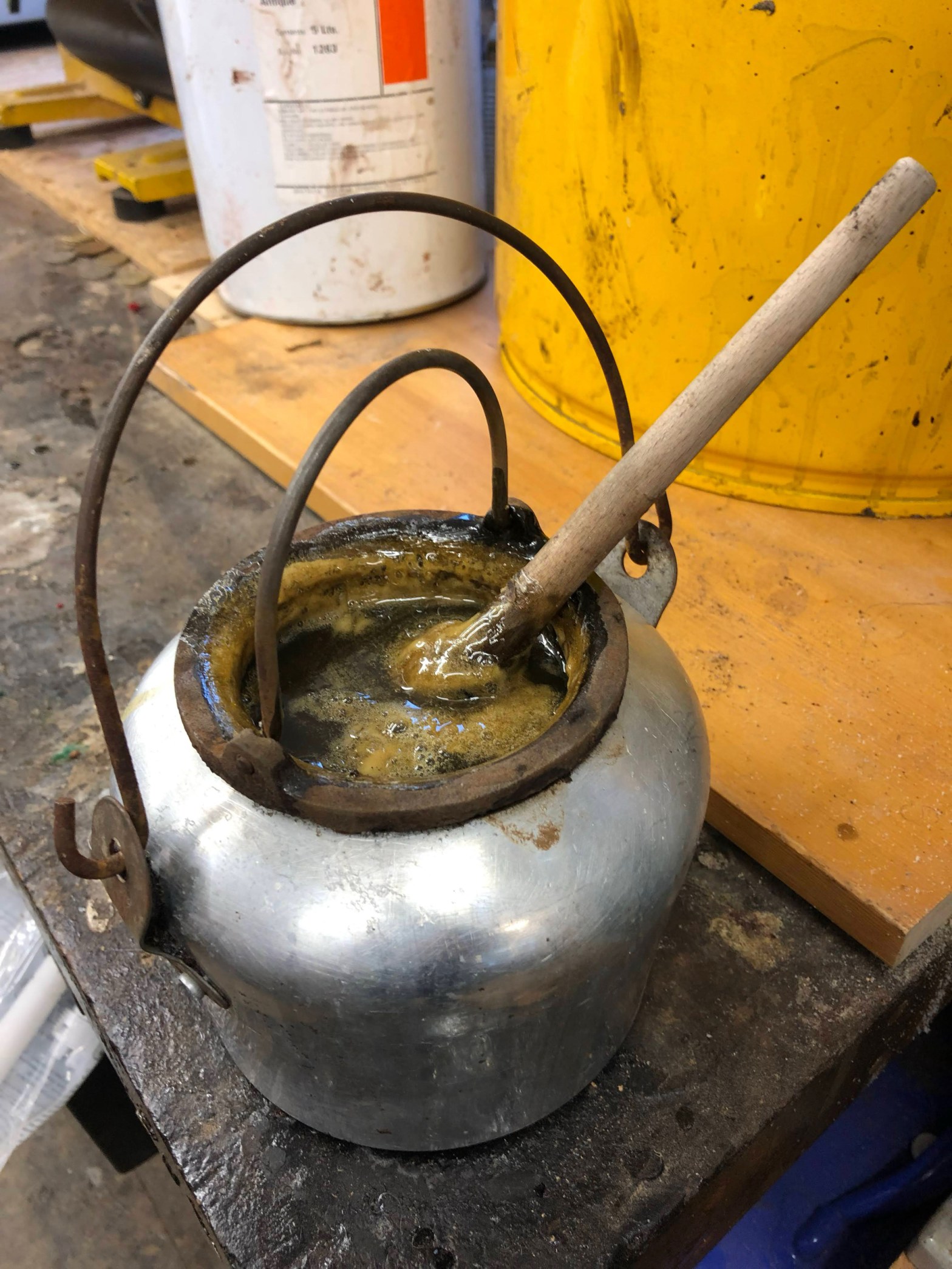
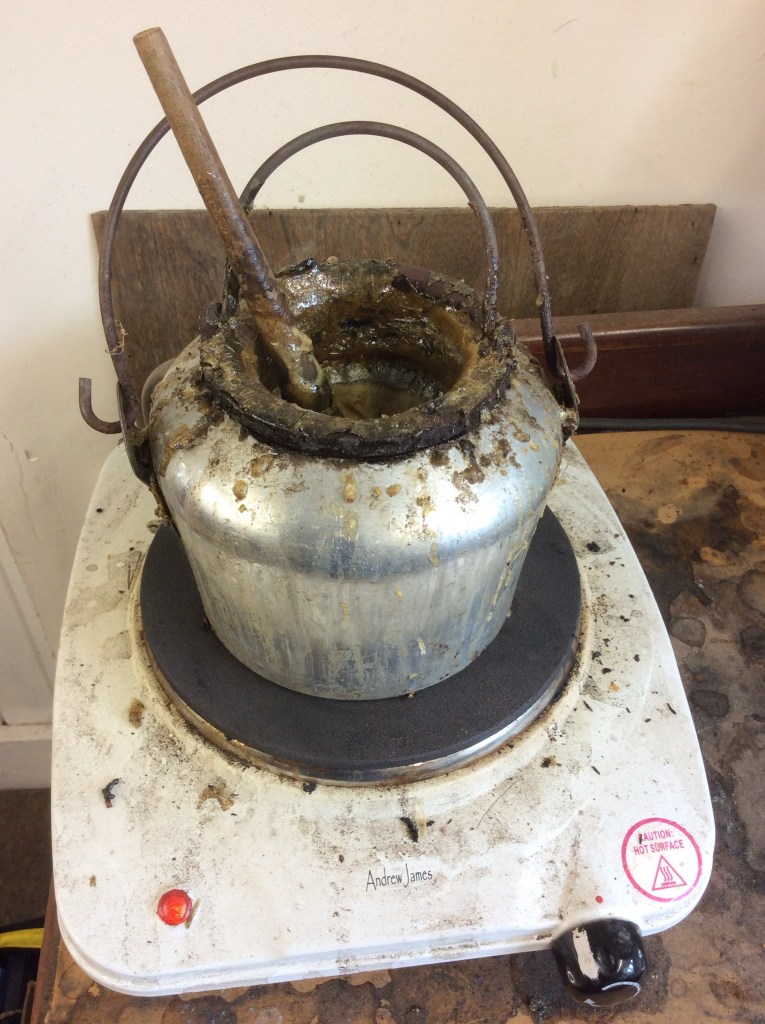
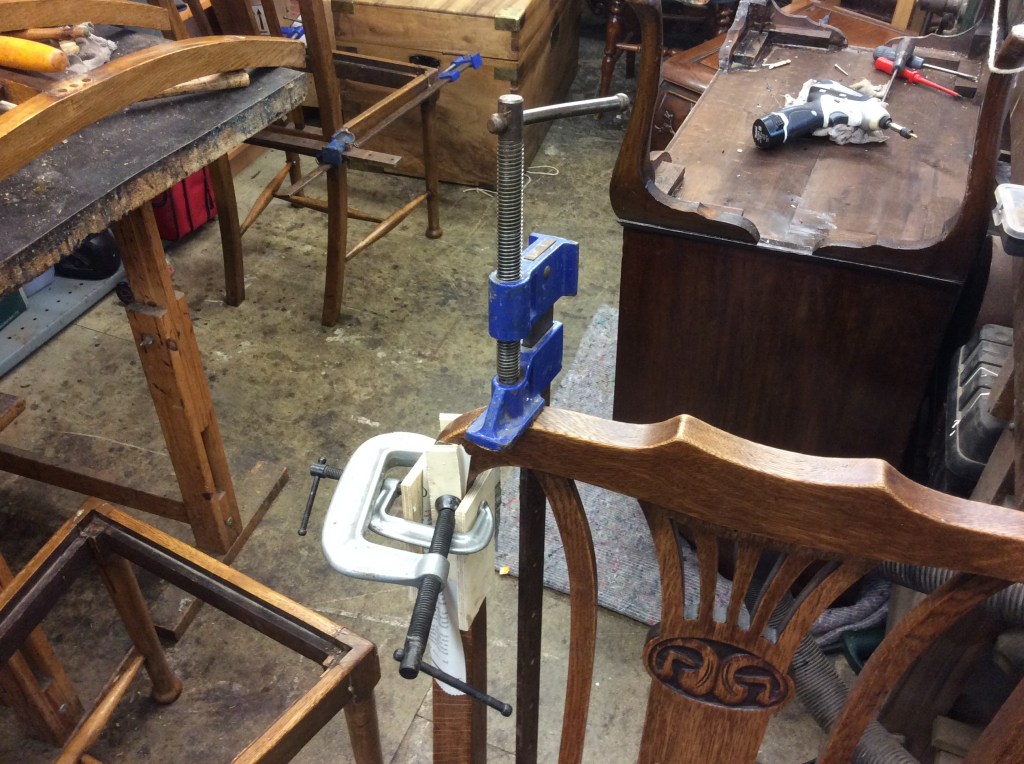
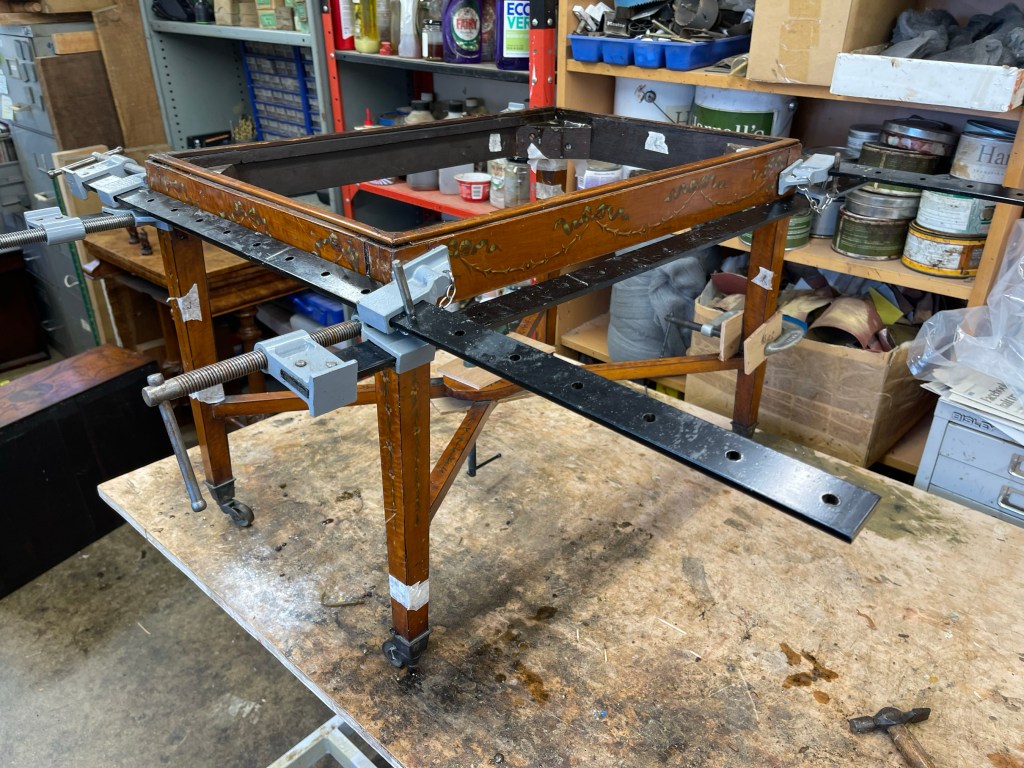
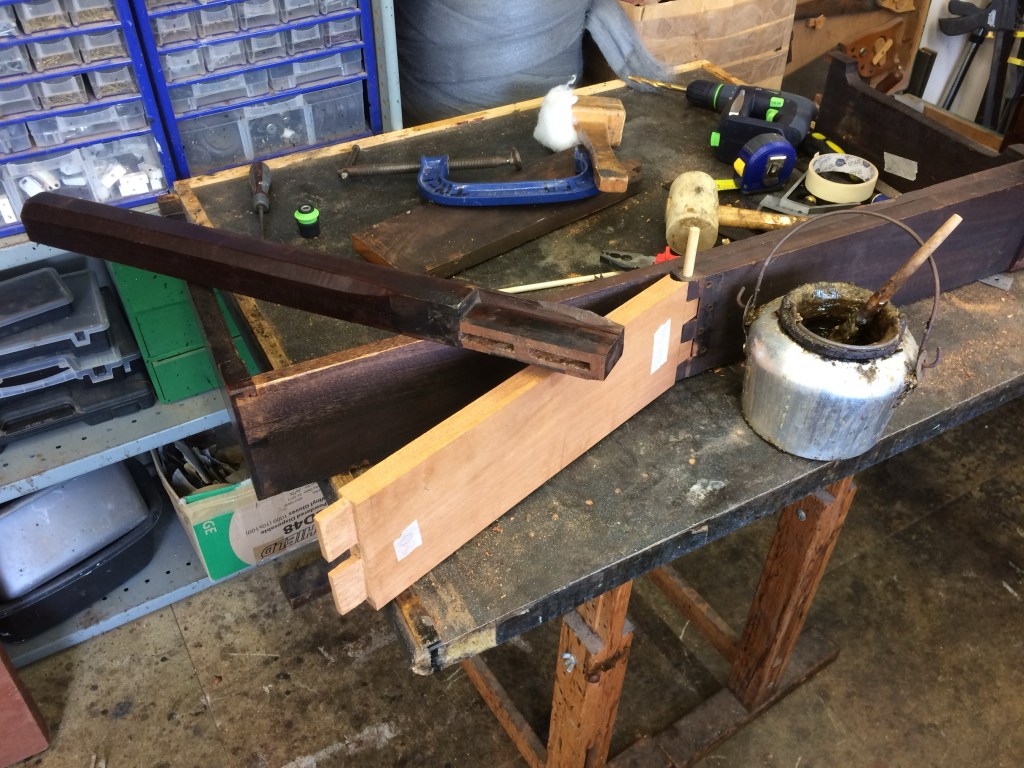
In my workshop, animal glue is used for regluing joint, veneer repairs, Reassembling carcasses and Conserving original construction wherever possible. The glue is heated in a glue pot, and applied warm. Joints are brought together while the glue is still liquid, and as it cools it pulls the joint tight. Animal glue has excellent tack, which means joints often hold themselves in position as the glue cools, particularly handy when you need another pair of hands.
Why I Choose Animal Glue for Antique Furniture
It Is historically correct. The most important reason is authenticity. Antique furniture was made with animal glue. Using the same adhesive respects the traditional methods and materials used by the maker. Restoration should not overwrite history. It should preserve it.
It Is Reversible
This is a crucial point. Animal glue can be softened with heat and moisture, allowing joints to be taken apart in the future without damaging the wood. This means repairs can be undone if necessary. Future restorers are not forced to break joints apart and original material is preserved. Modern glues such as PVA and epoxy form permanent bonds that often cause damage when repairs inevitably fail decades later.
It Works With Wood Movement
Wood moves with changes in humidity and temperature. Animal glue has a slight elasticity that accommodates this natural movement, rather than fighting against it. Hard, inflexible modern adhesives can cause splits, fractures, or failed joints in old timber.
It Fails Gracefully
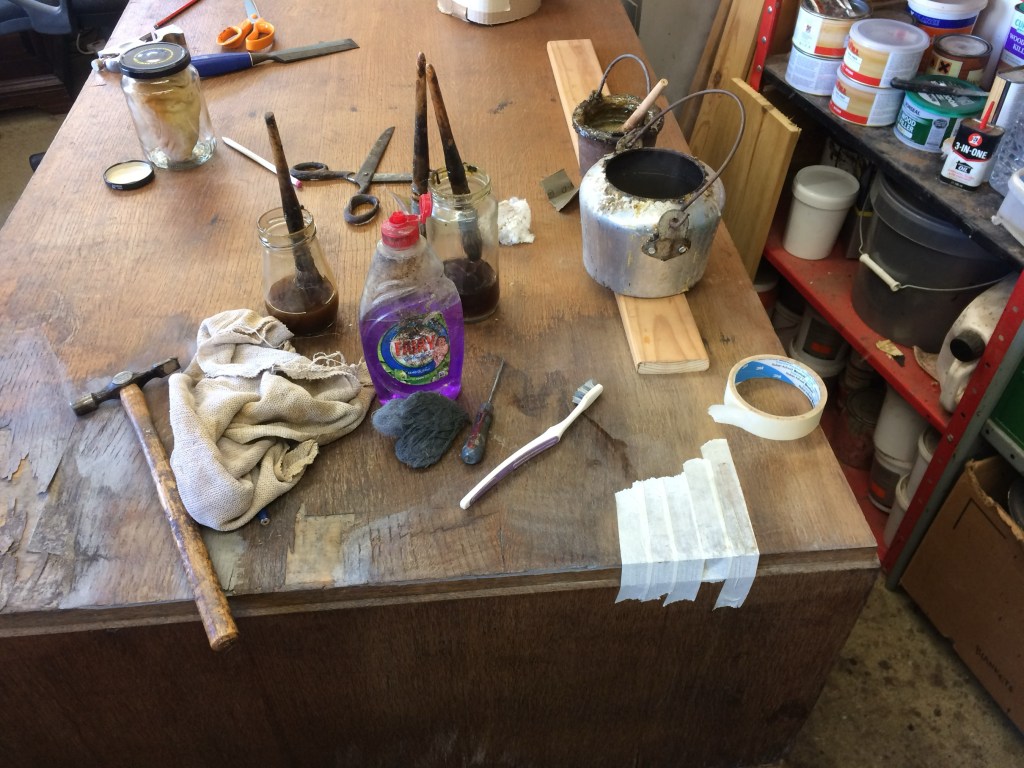
When animal glue fails, it usually does so cleanly at the glue line, not by tearing fibres out of the wood. This is exactly what you want in conservation work. The wood remains intact, and the joint can be cleaned. I use hot water and an old toothbrush and scrub all the old glue off. Then the piece can be re-glued properly.
It is strong enough without being destructive
There is a misconception that animal glue is weak. In reality, a properly prepared and applied animal glue joint is more than strong enough for antique furniture. The aim in restoration is not to create something indestructible, but something repairable.
Why Not Use Modern Glue Instead?
I do use modern adhesives occasionally. PVA is suitable for modern furniture, like mid century and non-historic repairs. Epoxy resin has its place for structural fills or stabilisation where no traditional solution exists. However, these glues are not appropriate for original joints in antique furniture. Once applied, they are effectively permanent and often cause irreversible damage over time, plus they are made from plastic.
So in restoration, strength alone is not the goal. Compatibility, reversibility, and respect for the object matter far more.
Animal Glue and Good Restoration Practice
Using animal glue is part of a wider restoration philosophy. Preserve as much original material as possible, intervene only where necessary. Use materials that can be reversed or repaired and respect the craftsmanship of the original maker. This approach ensures that furniture can continue to be used, enjoyed, and maintained for generations to come.
Animal glue has survived for centuries not because it is old-fashioned, but because it works — particularly in the context of antique furniture.
For a restorer, it offers Historical accuracy, Structural integrity, Reversibility and Longevity. Using animal glue is not about nostalgia. It is about making thoughtful, responsible decisions that put the furniture first. That is why it remains a cornerstone of my restoration work today.